Late Night. Loud Flavor.
Noodle Lab is a unapologetically fun Ramen company :
Here to flip-the-script on the status quo of the Ramen world.
Noodle Lab is a chef-driven instant ramen brand that turns late-night eating into an experimental culinary experience.
It brings high-end global flavor fusion to the convenience aisle, combining the accessibility of instant noodles with the creativity of contemporary food culture.
THE PROBLEM
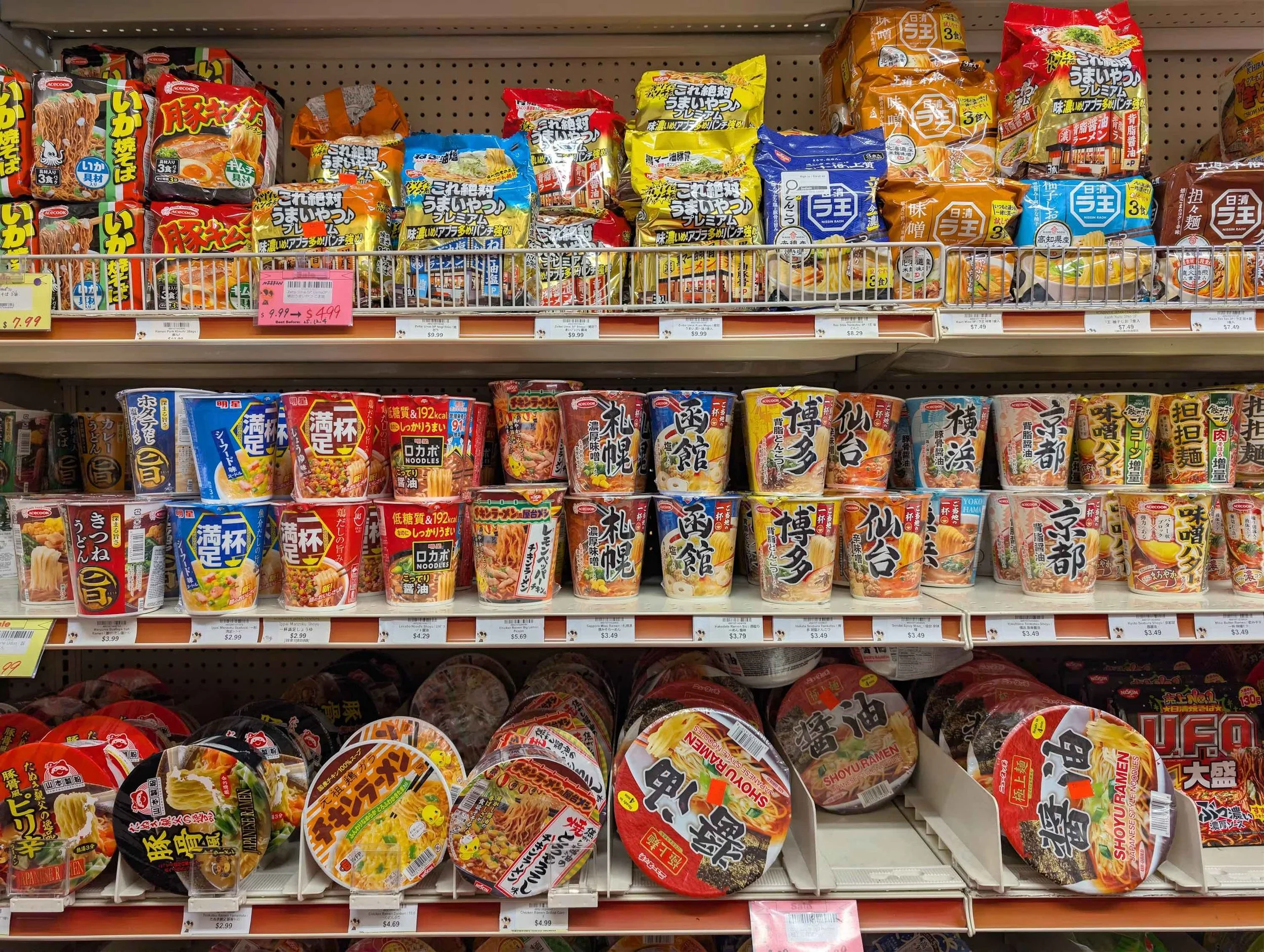
The instant ramen category is dominated by two extremes:
Cheap, familiar, repetitive
Products compete on price and nostalgia, with flavor innovation moving slowly and packaging looking interchangeable.
Premium ramen requires effort
Restaurant-quality ramen is expensive, time-consuming, and inaccessible when consumers want something fast at midnight.
THE OPPORTUNITY
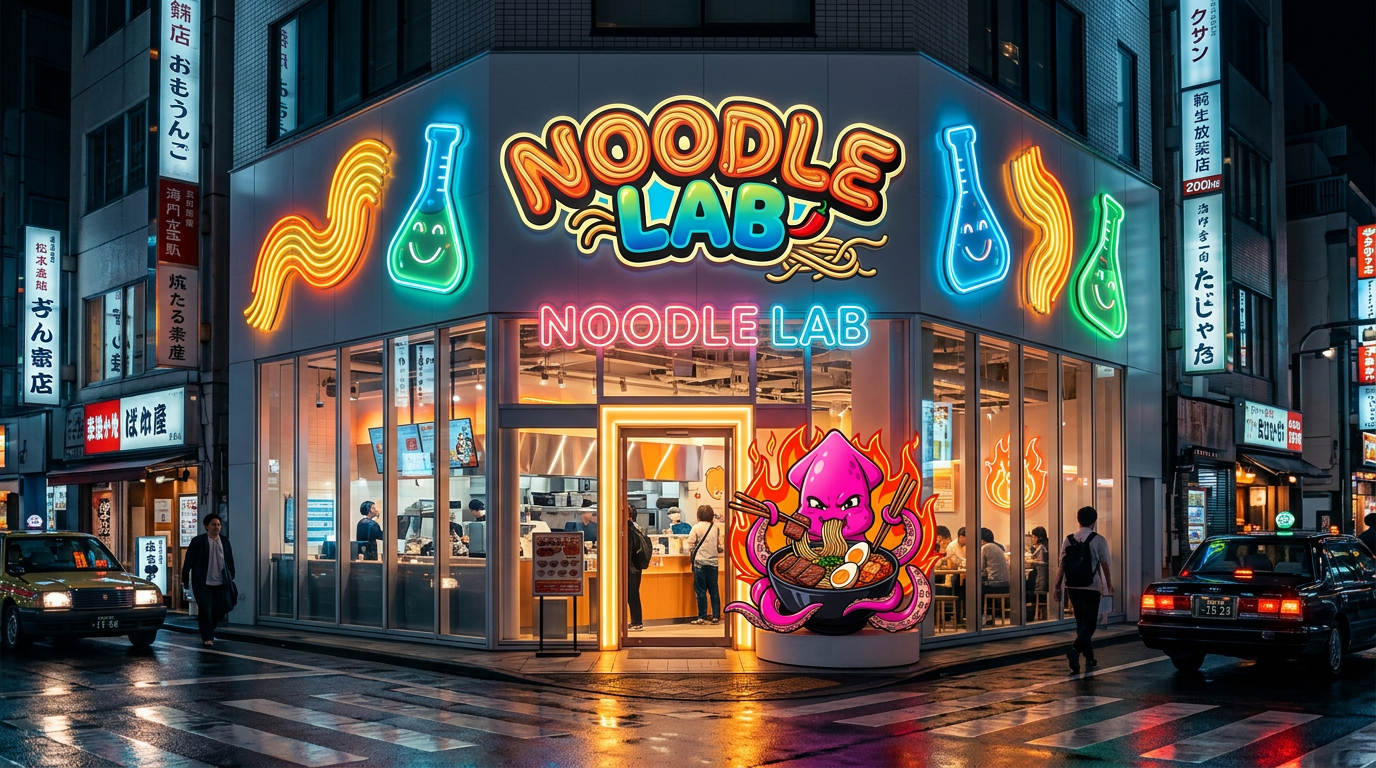
Noodle Lab occupies the whitespace between instant convenience and chef-level experimentation. Making ramen more than just a meal, but an experience.
Fast
Interesting
Collectible
Shareable
POSITIONING
For Gen Z food explorers who are bored by ordinary instant ramen, Noodle Lab is the chef-driven noodle brand that delivers unexpected global flavor collisions in minutes—because late-night cravings deserve creativity, not compromise.
NOODLE LAB
────────────────────────
Archetype
The Alchemist + The Rebel
Personality
Loud, curious, obsessive, playful.
Pokemon + Anthony Bourdain
A rallying cry that elevates ramen culture while giving the brand attitude.
Tone
Curated chaotic confidence
Emotional payoff
“I found something nobody else is eating.”
────────────────────────
Consumer Insight
“I don’t want dinner. I want a discovery.”
This is not about hunger. It is about stimulation, novelty, collectibility, and identity.
Primary Audience
“Midnight Explorers”
Age: 18–30
Mindset:
* Watches food creators and anime
* Enjoys trying limited-edition snacks
* Shares unusual food discoveries
* Values aesthetic packaging
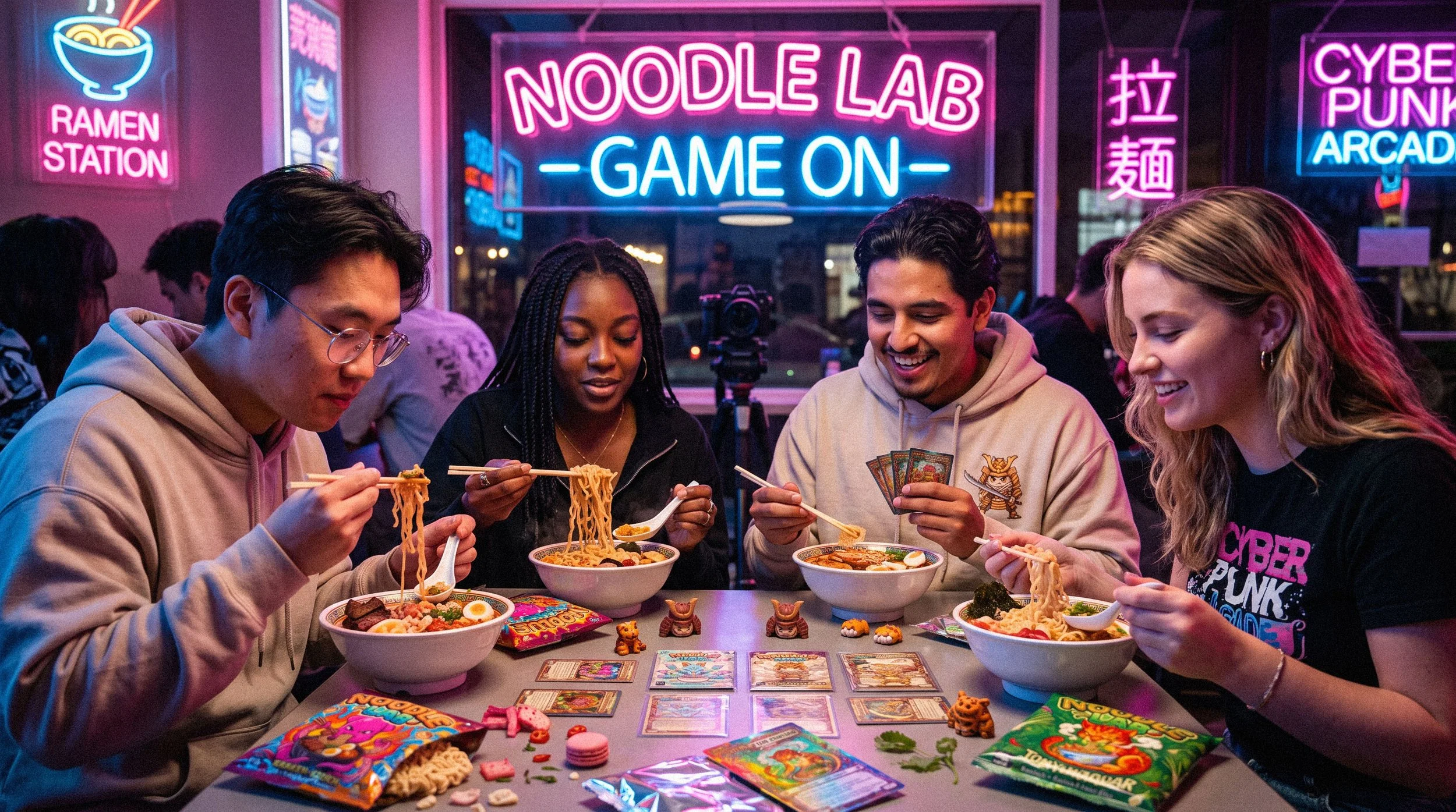
* Eats late at night while gaming, studying, creating, or hanging out
The Core Idea
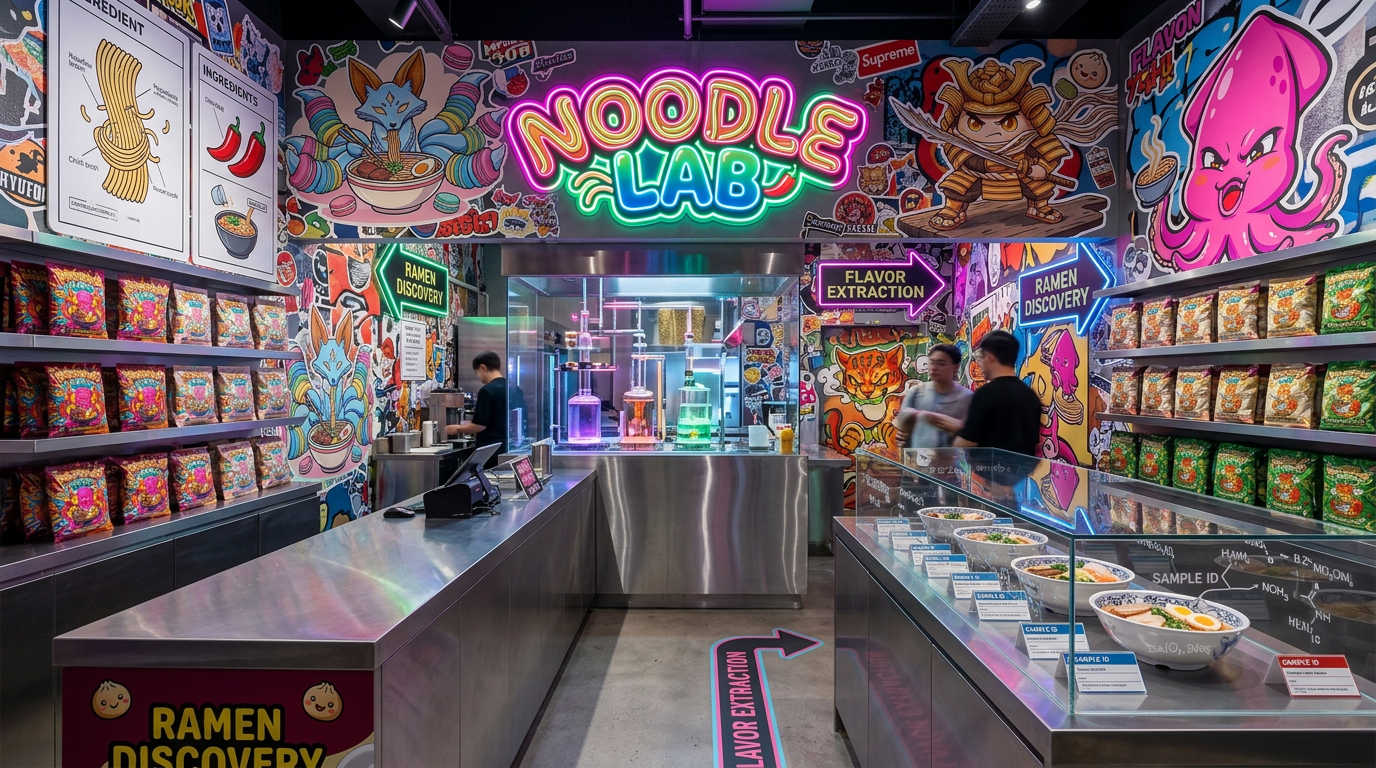
What if instant ramen was treated like a streetwear drop with collectible card game rather than a grocery product?
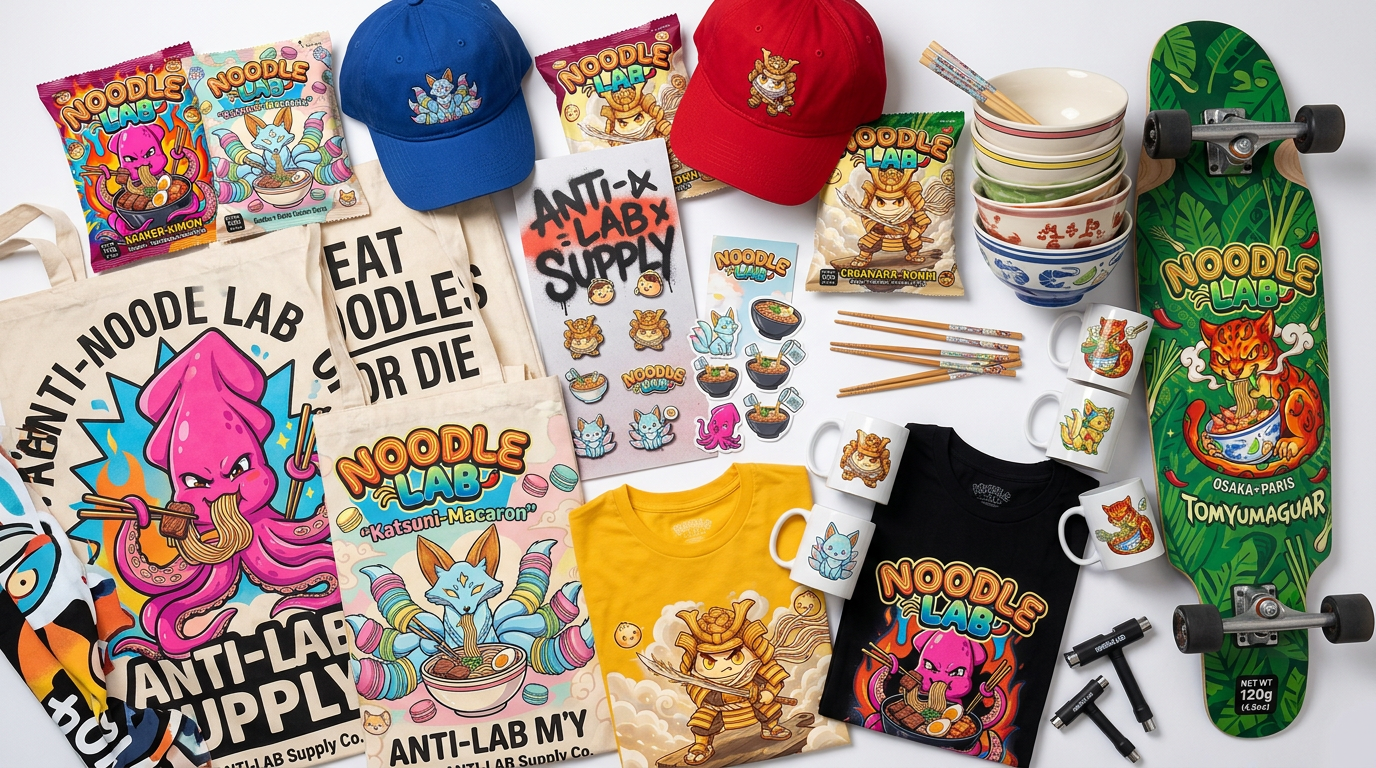
Behaviors:
* Shops at Target, H Mart, Uwajimaya, and online
* Buys novelty drinks, sauces, and snacks
* Follows brands with strong visual identity
* Will pay $3.99–$6.99 for a “cool” instant food product
Brand Legacy in the Making
This isn’t just a ramen company.
This is how you build a franchise.
Loud
Curious
Obsessive
Playful
NAMING SYSTEM ─────────────
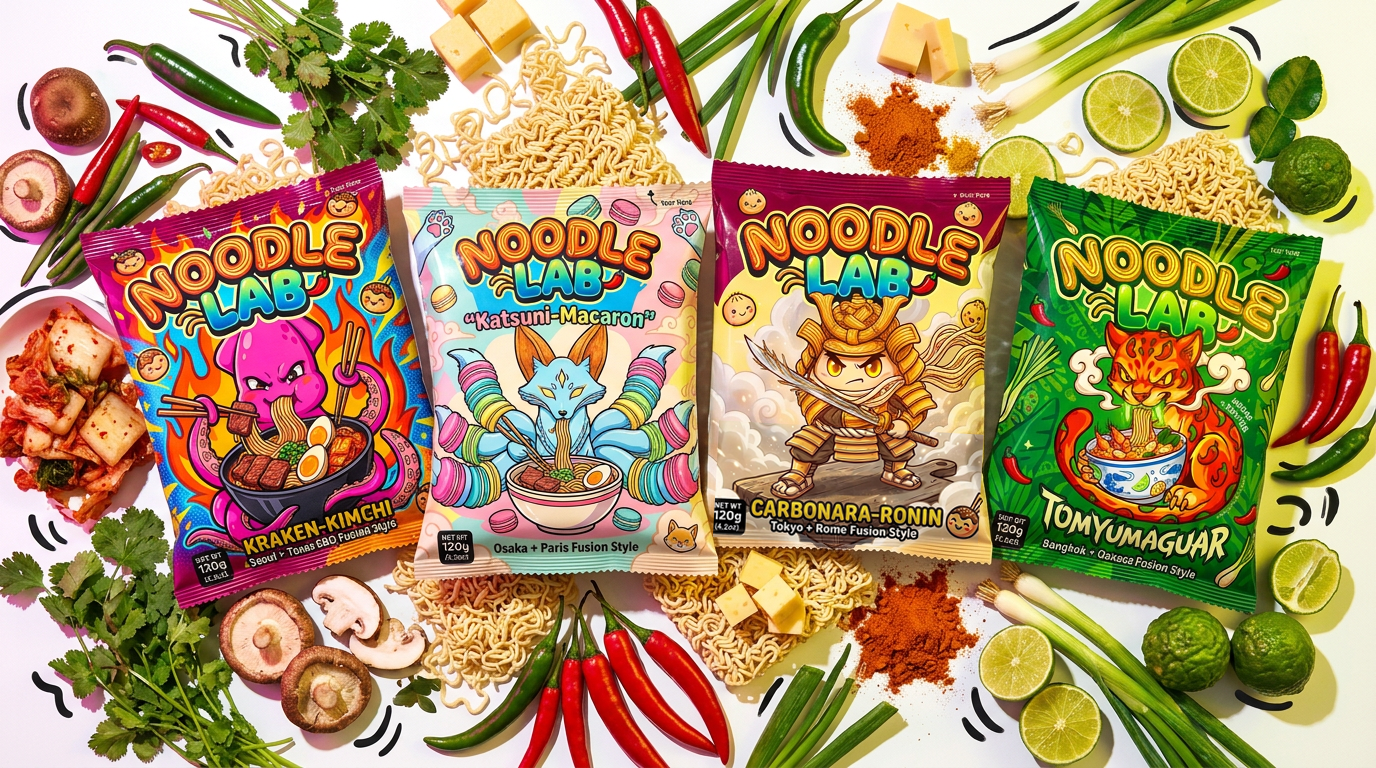
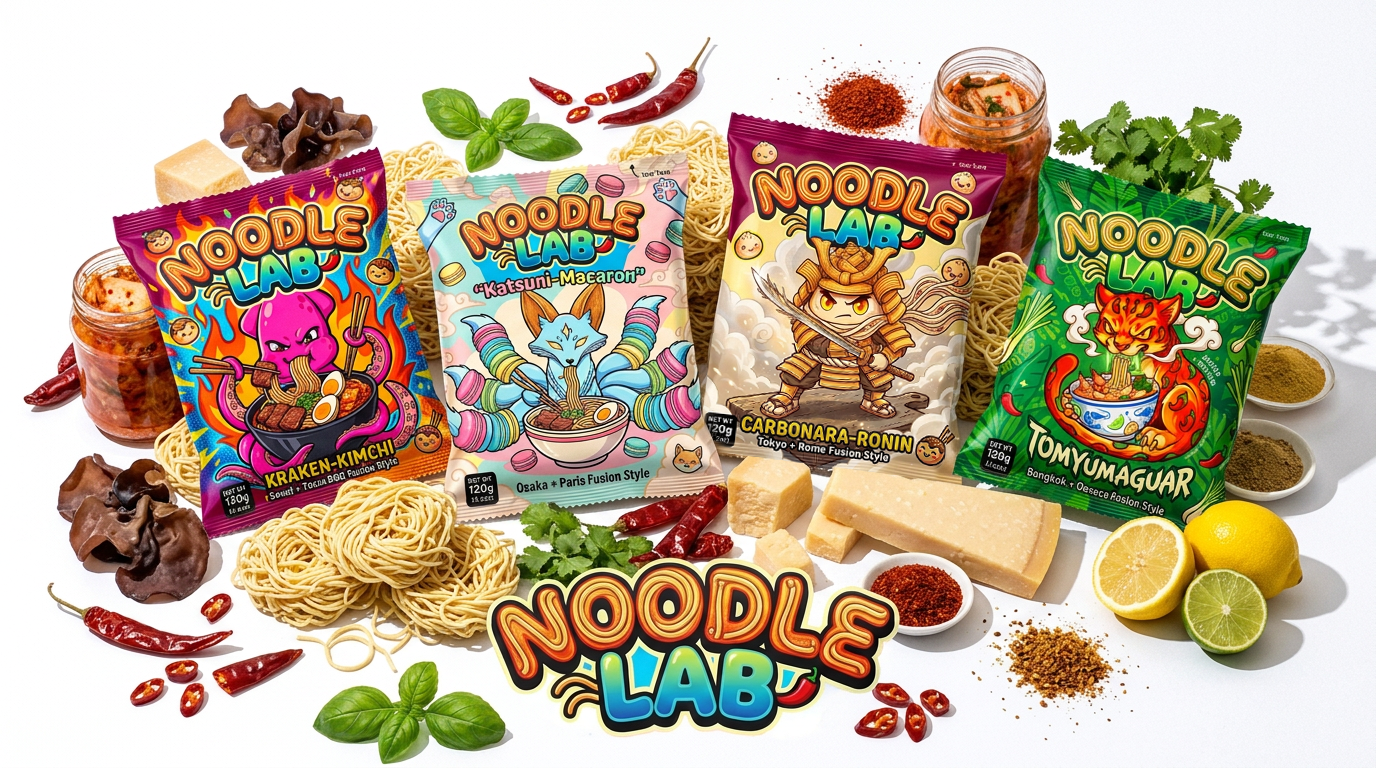
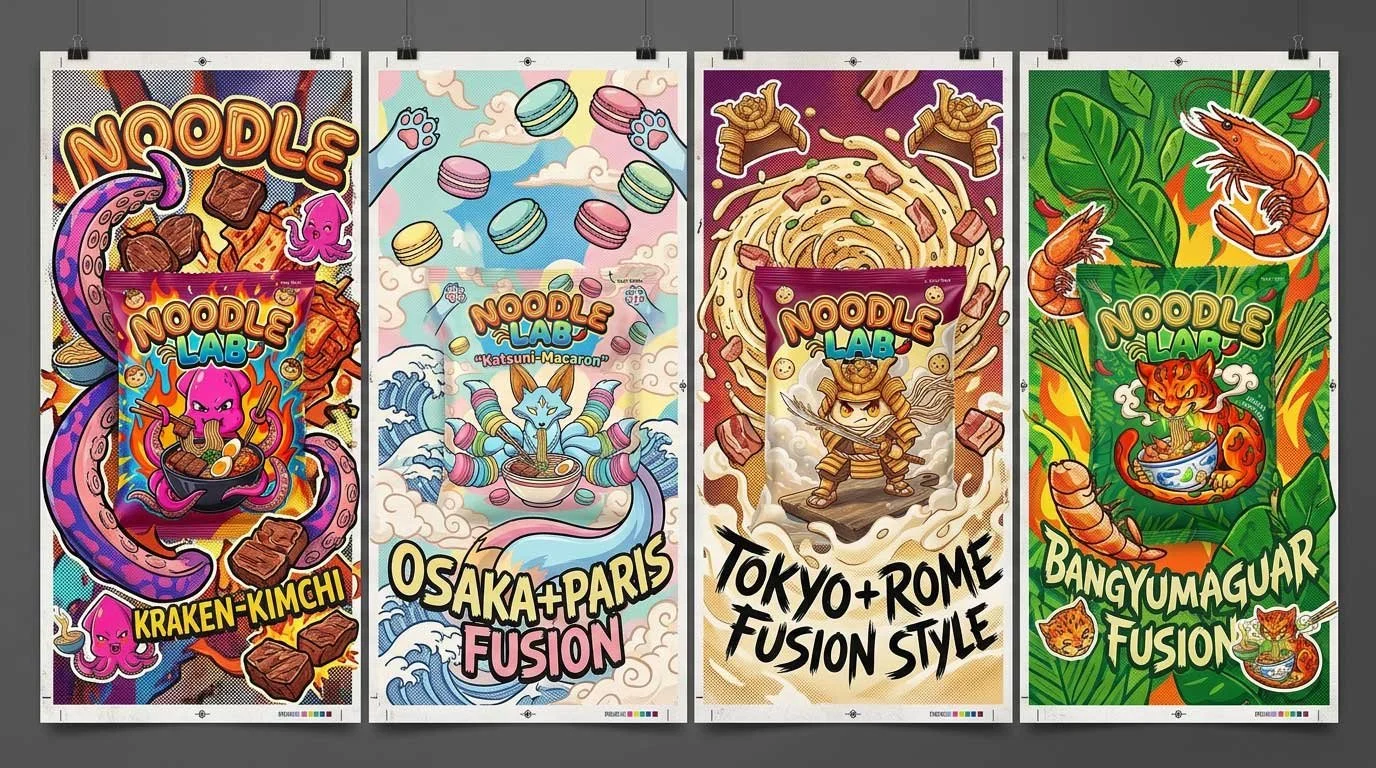
Designed as a collectible system.
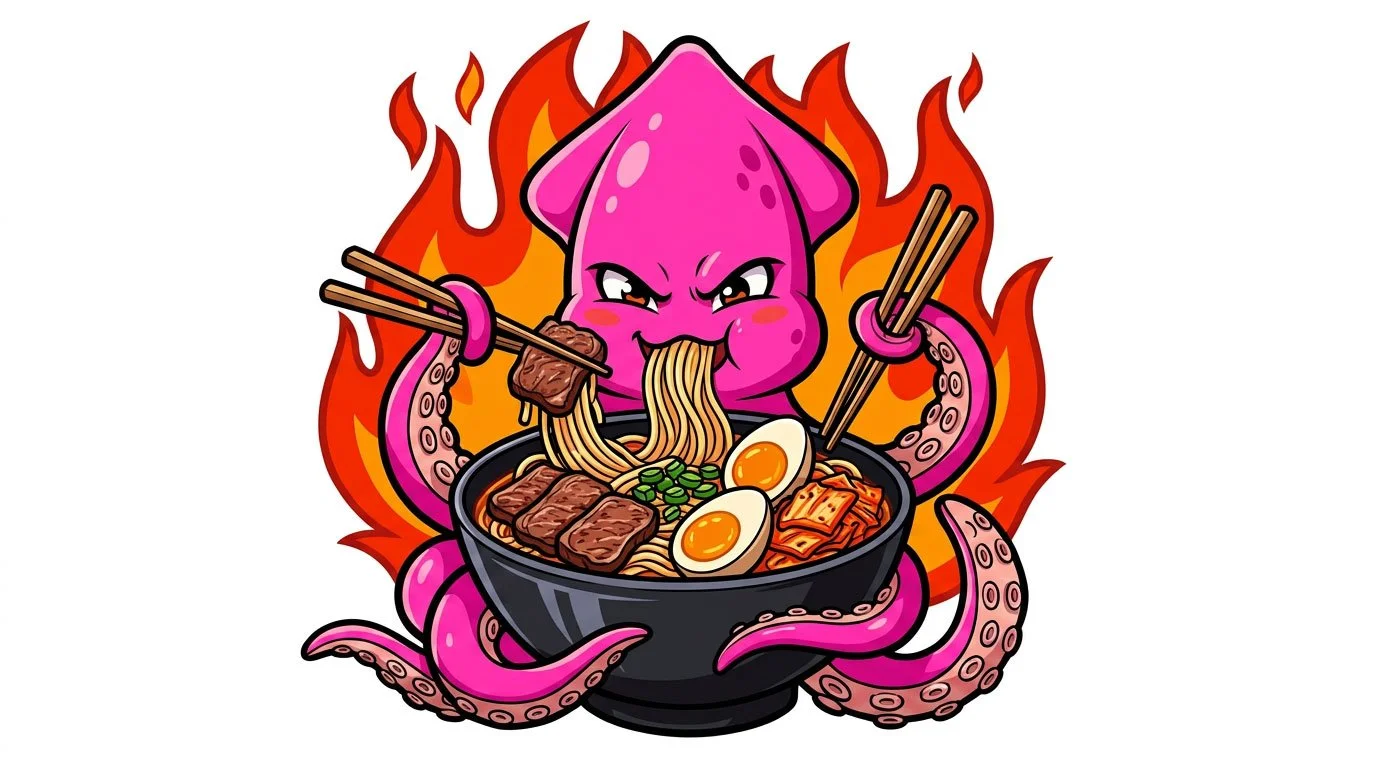
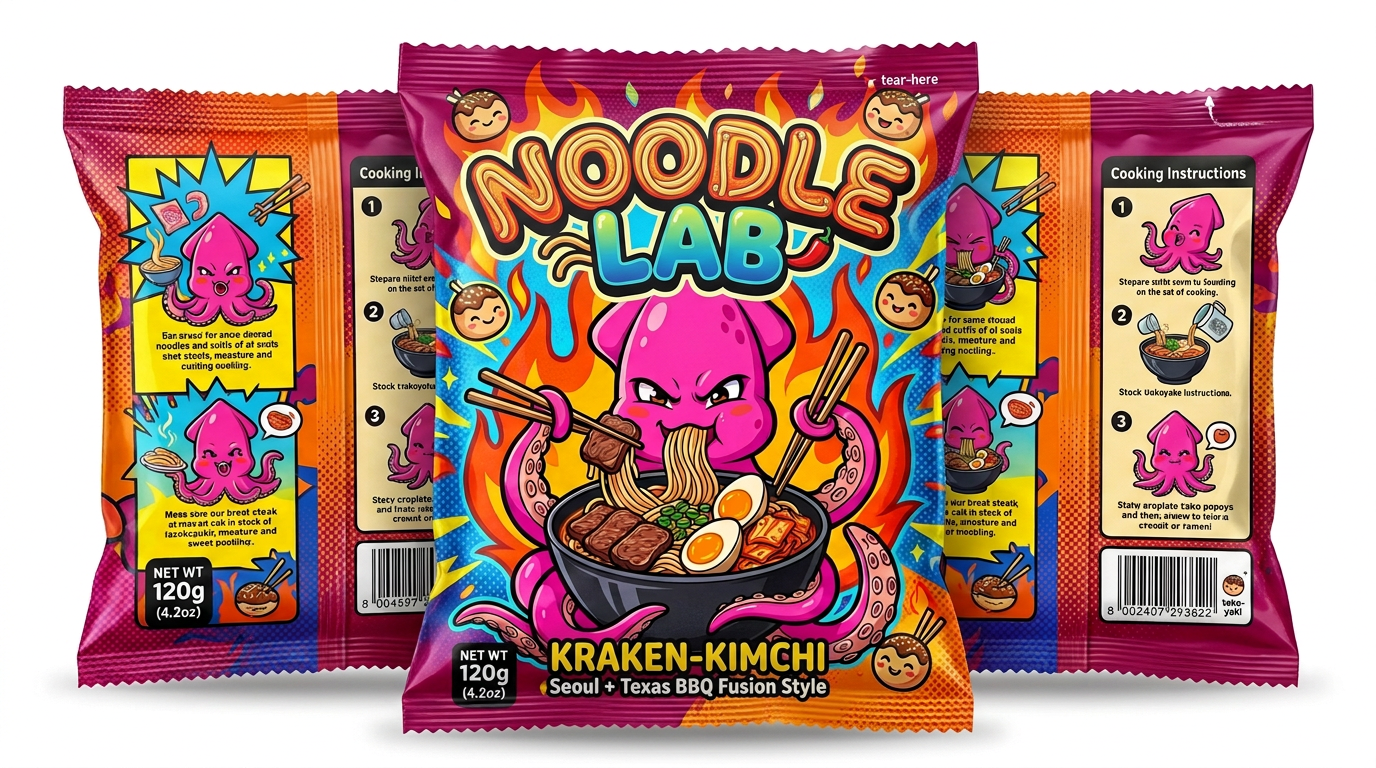
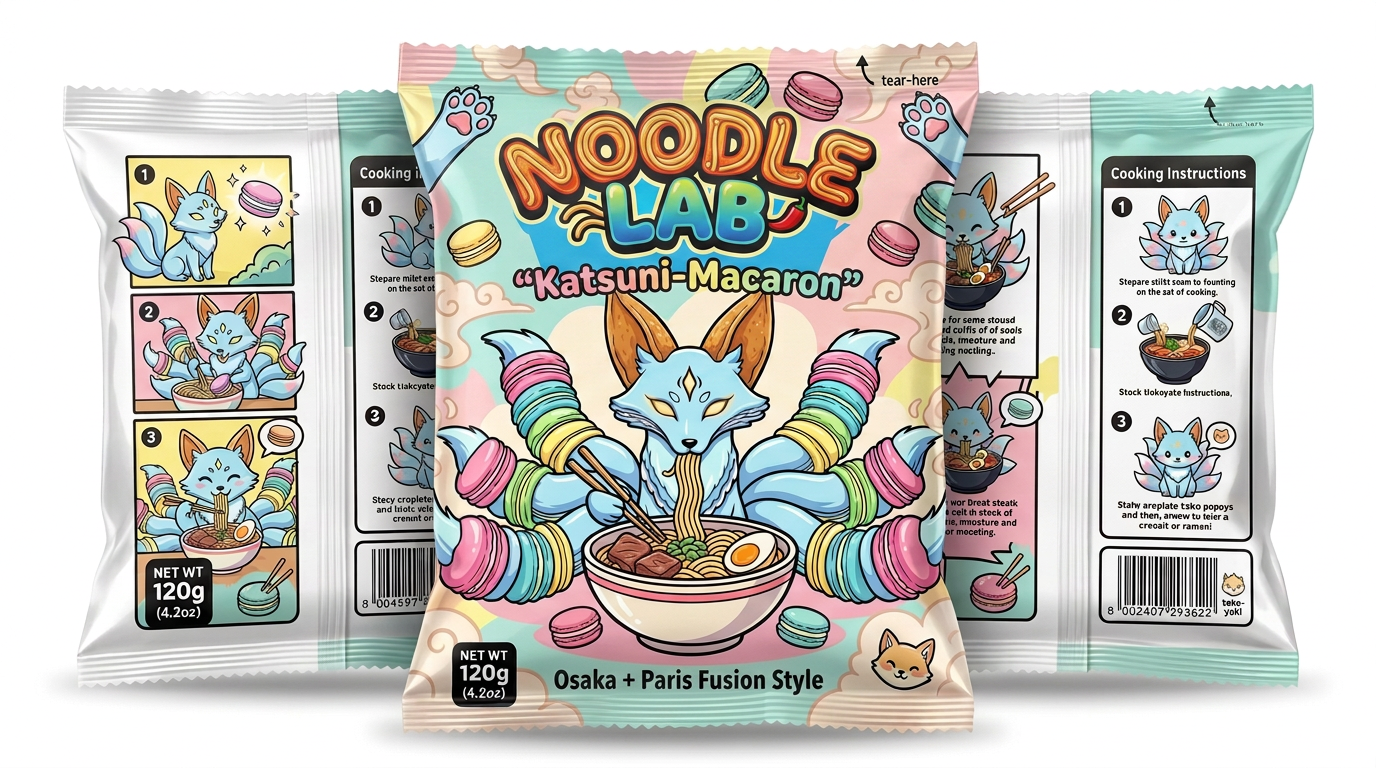
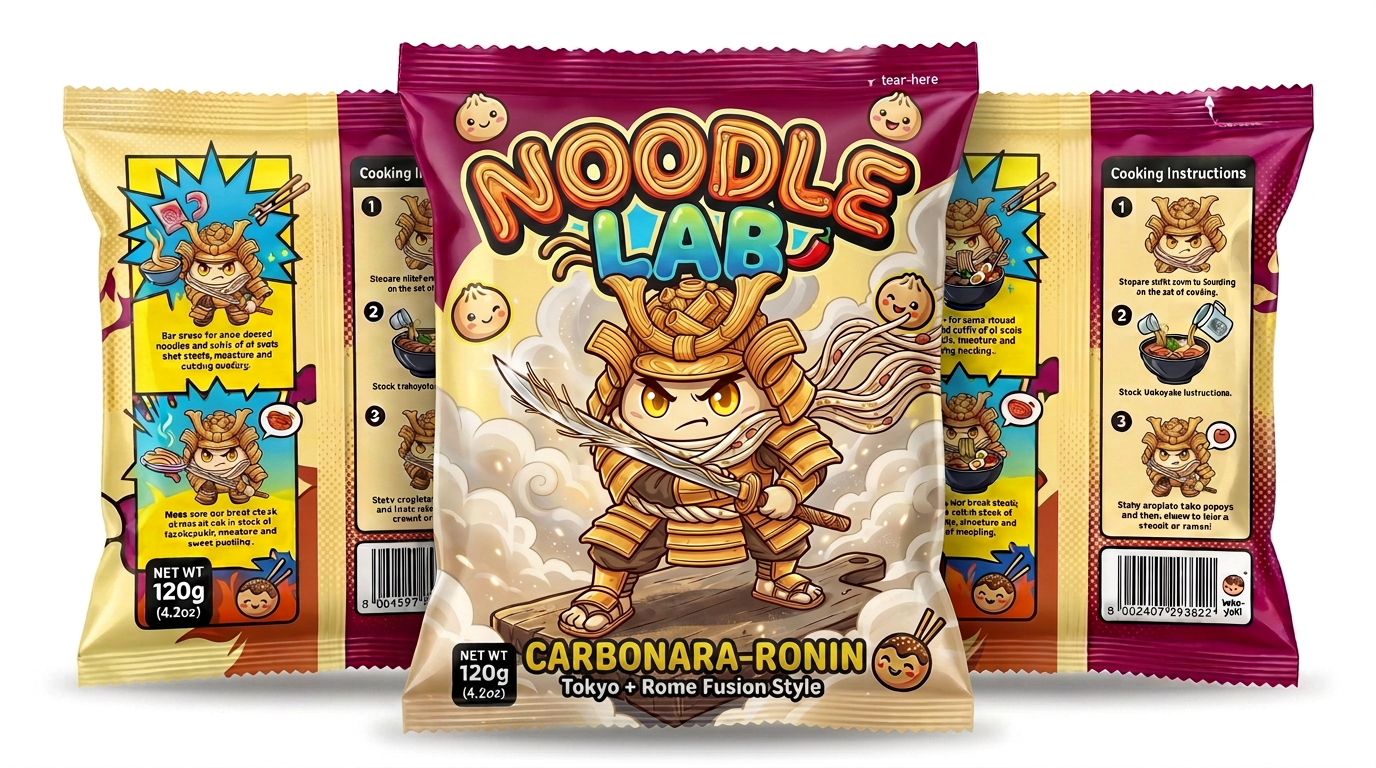
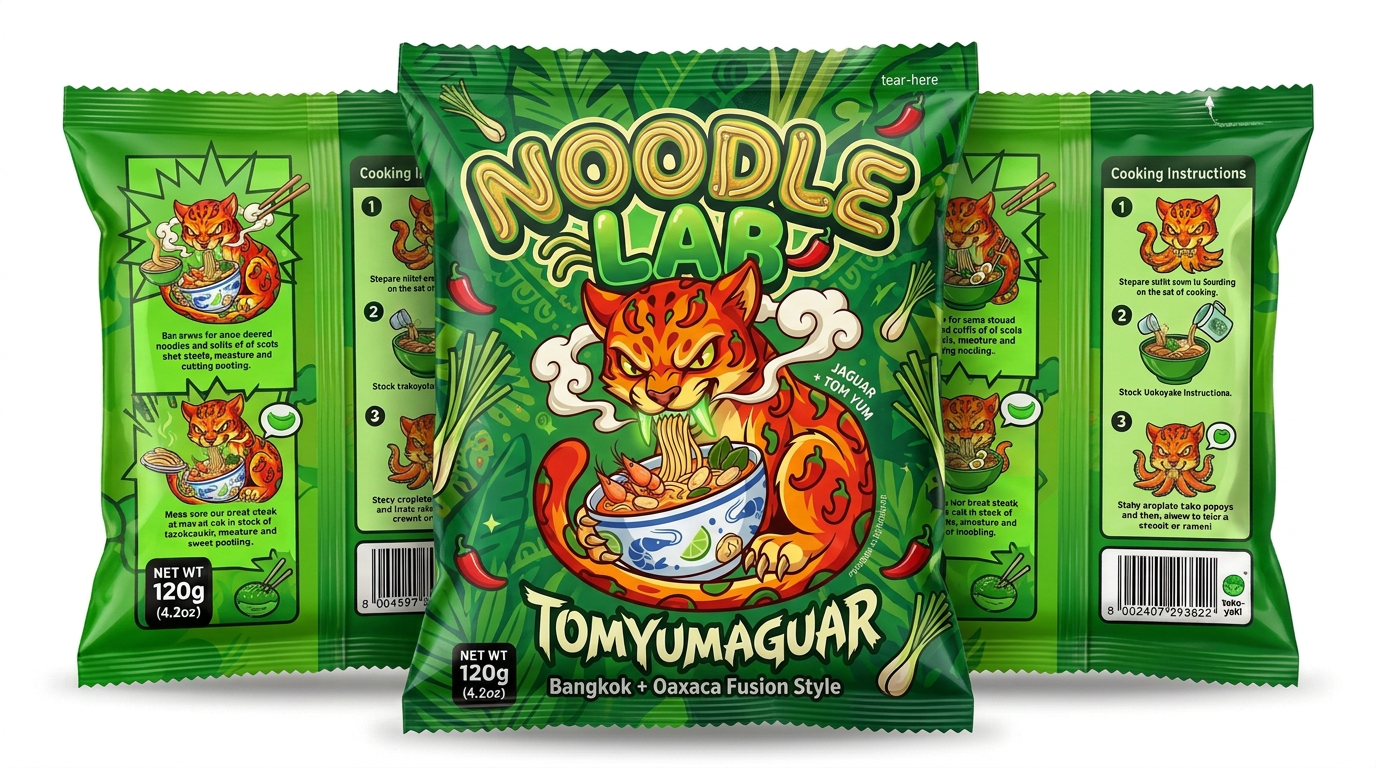
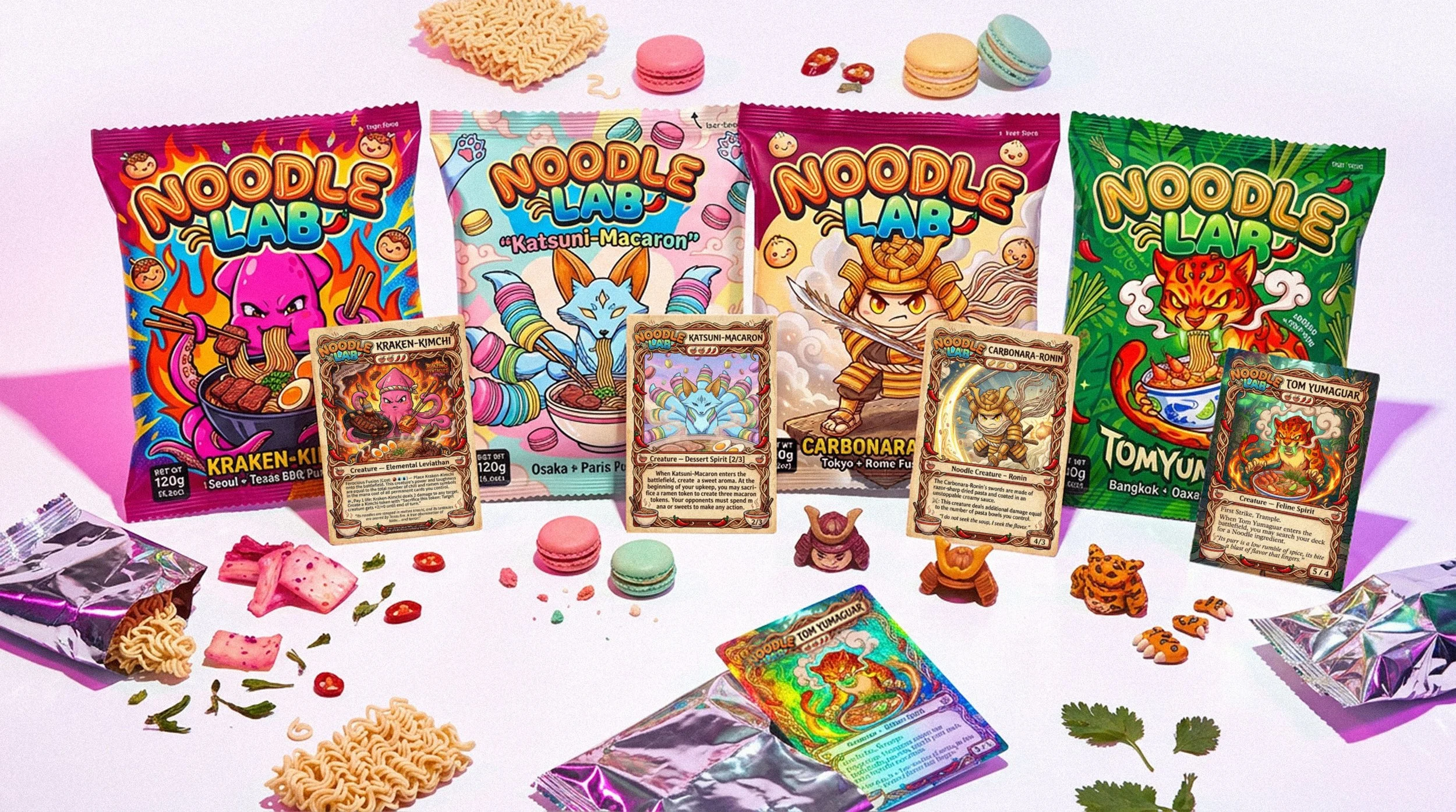
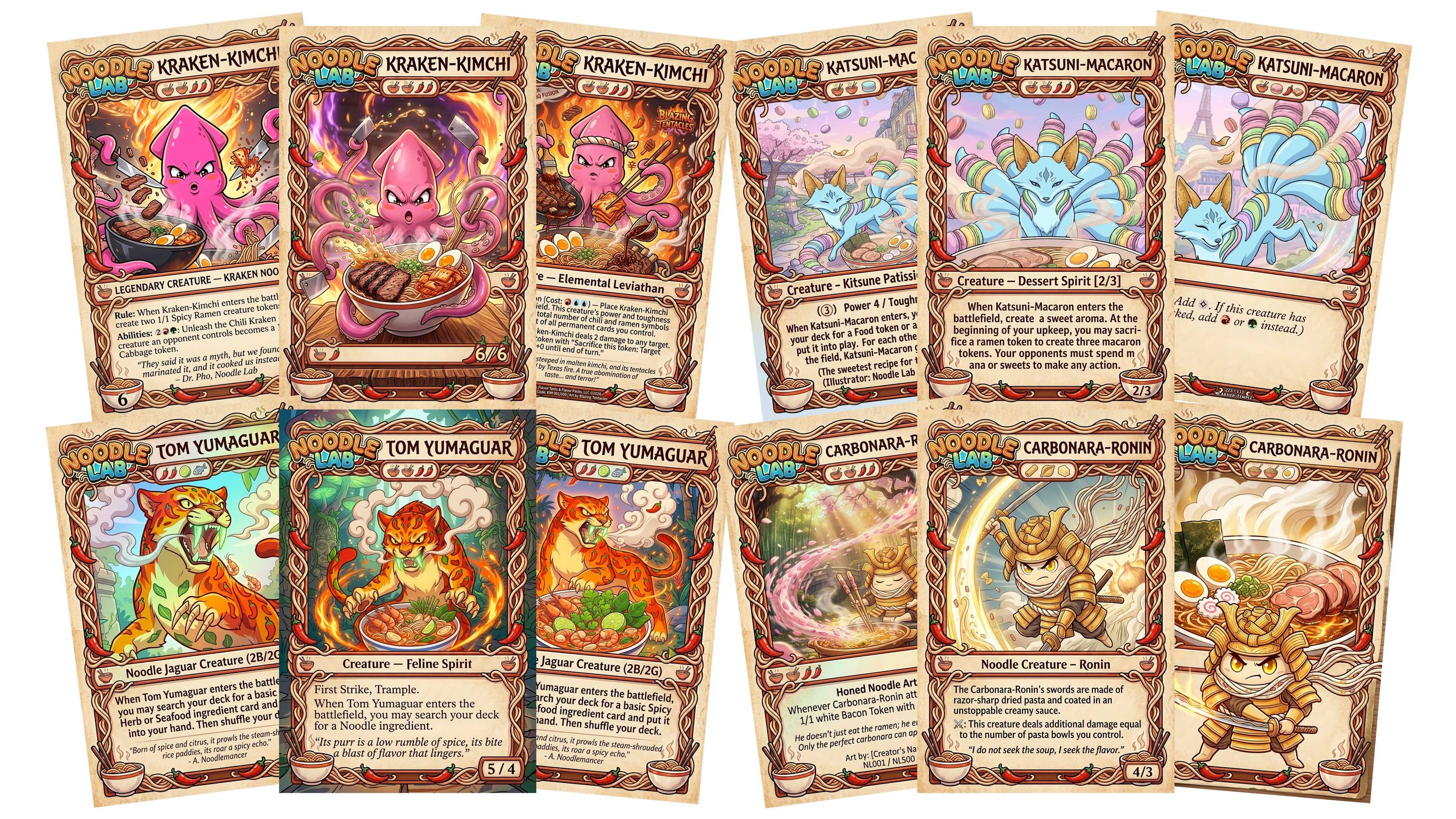
Each package flavor fusion is represented by a unique and recognizable mascot character.
──────────────────────────────────────────
Kraken-Kimchi
Katsuni-Macaron
Carbonara-Ronin
Tom-Yumaguar
──────────────────────────────────────────.
Products aren’t just another flavor, but rather become an iconic personality to collect.
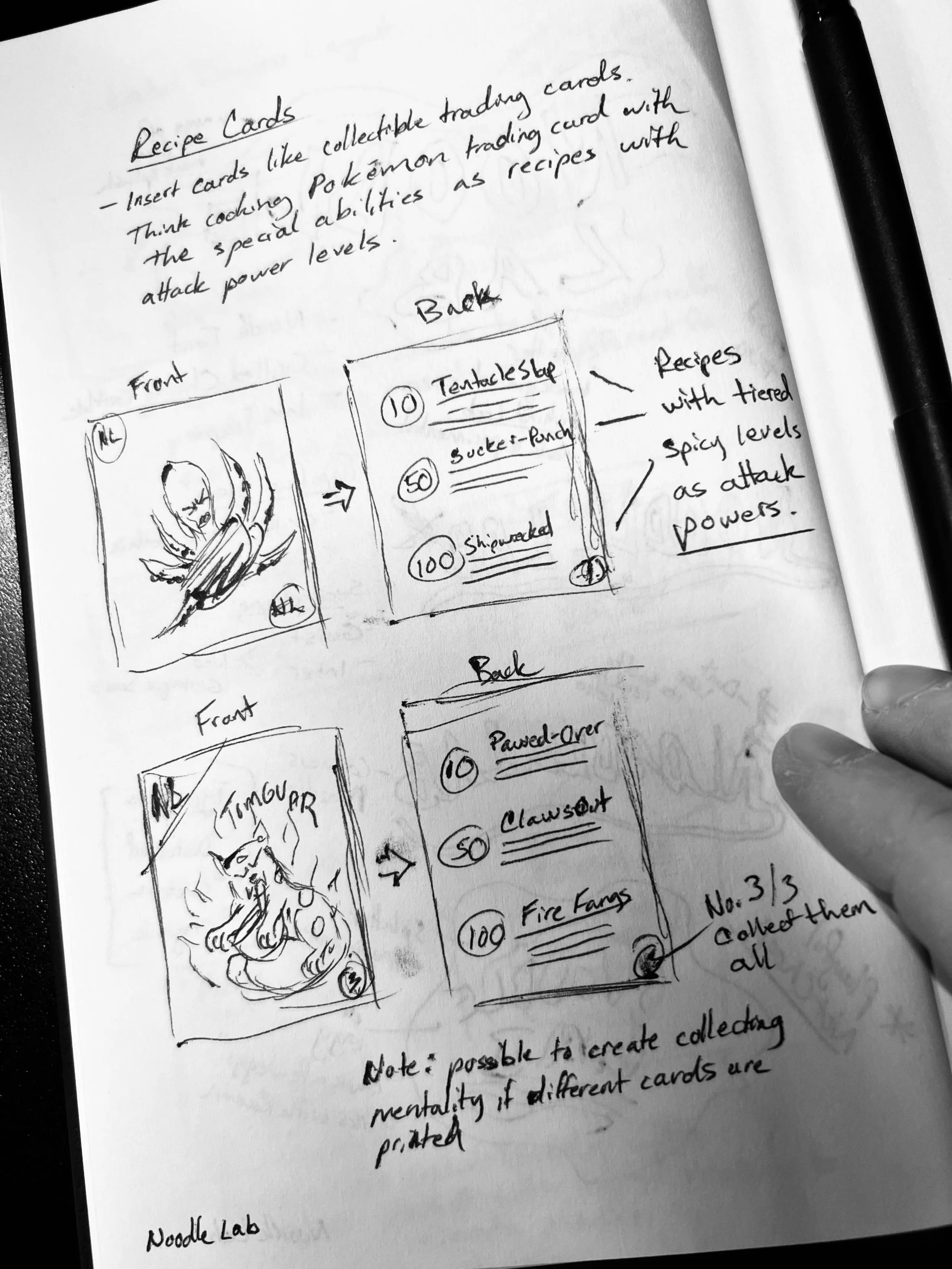
Trading Card System
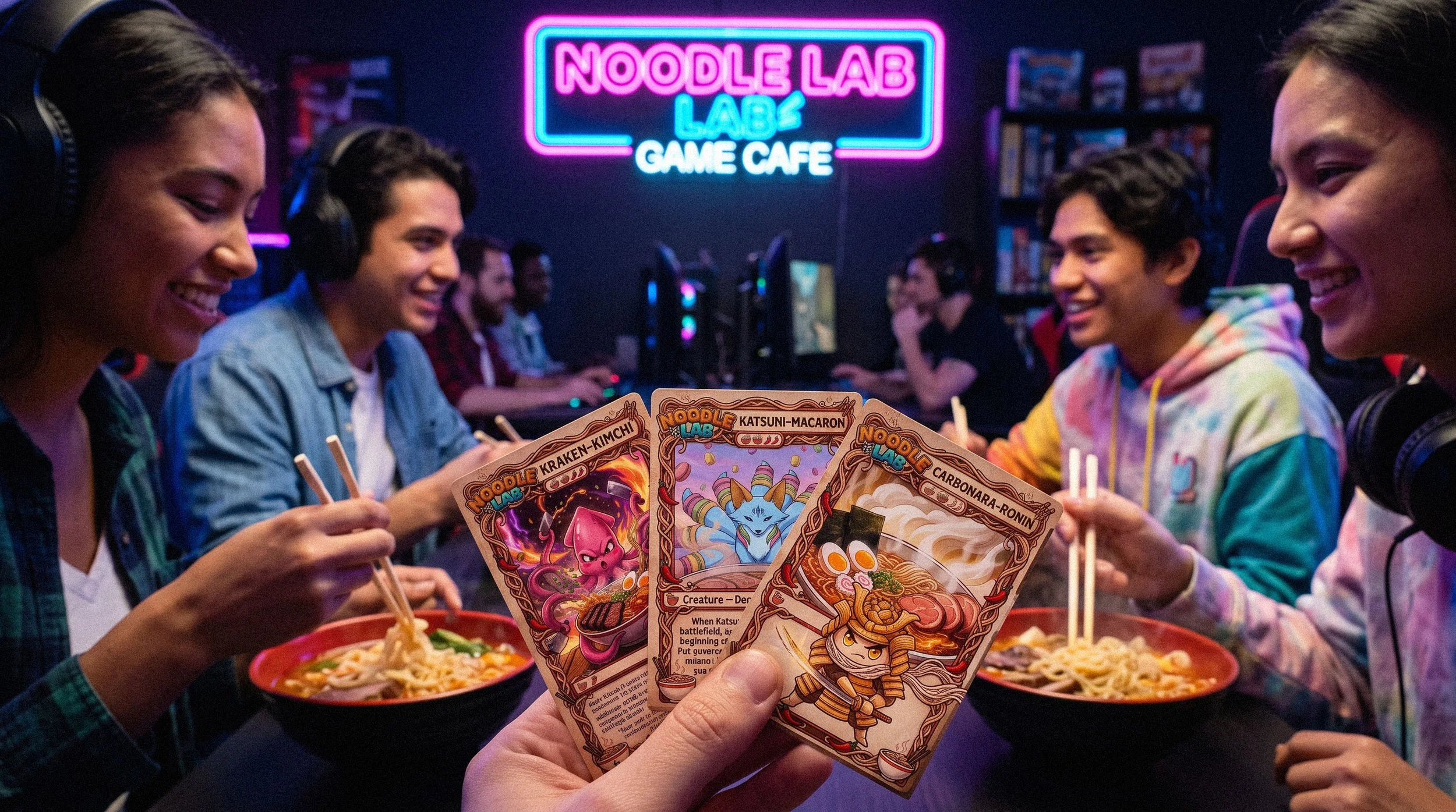
Each package comes with a collectible trading card featuring the flavor mascot.
This creates an infinite amount of collectibles for customer purchases.
──────────────
Philosophy:
Collectible mentality and community engagement for repeat purchases.
─────────────────────────────
The Strategic Payoff
This concept demonstrates that you can:
* Identify category stagnation
* Build a clear positioning strategy
* Translate insight into messaging
* Create a scalable visual system
* Designed for experience NOT just for retail shelf impact
* Think in campaigns and product drops
* Connect branding to consumer collecting behavior and repeat purchase
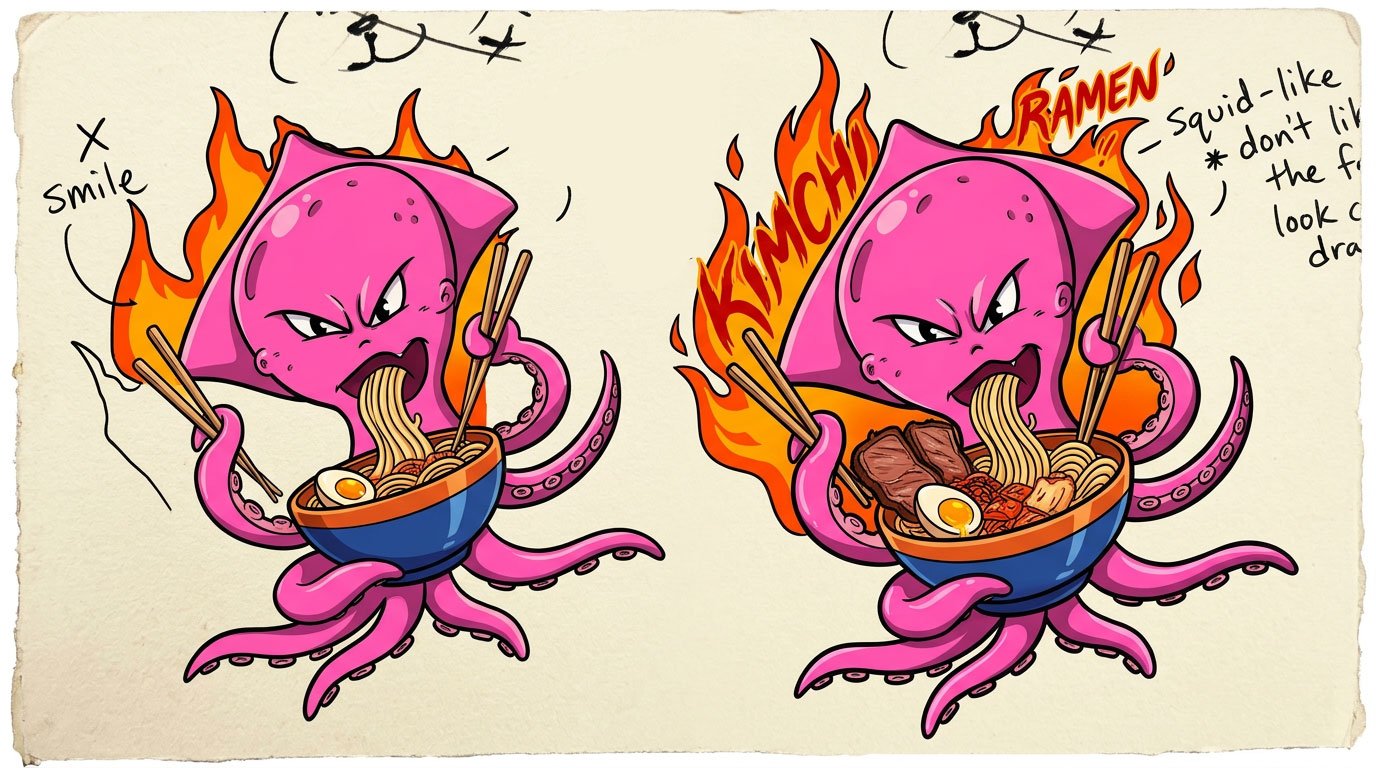
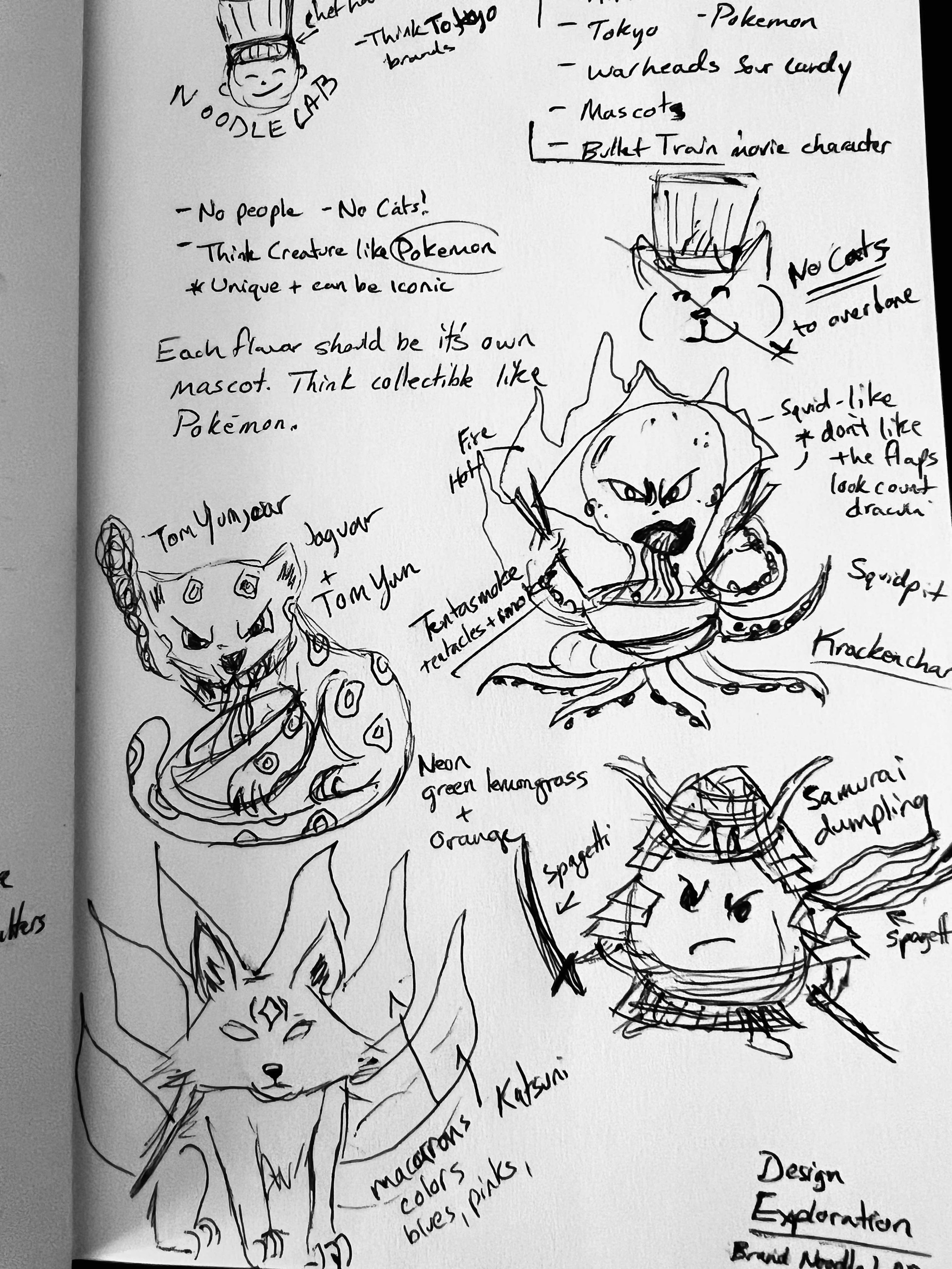
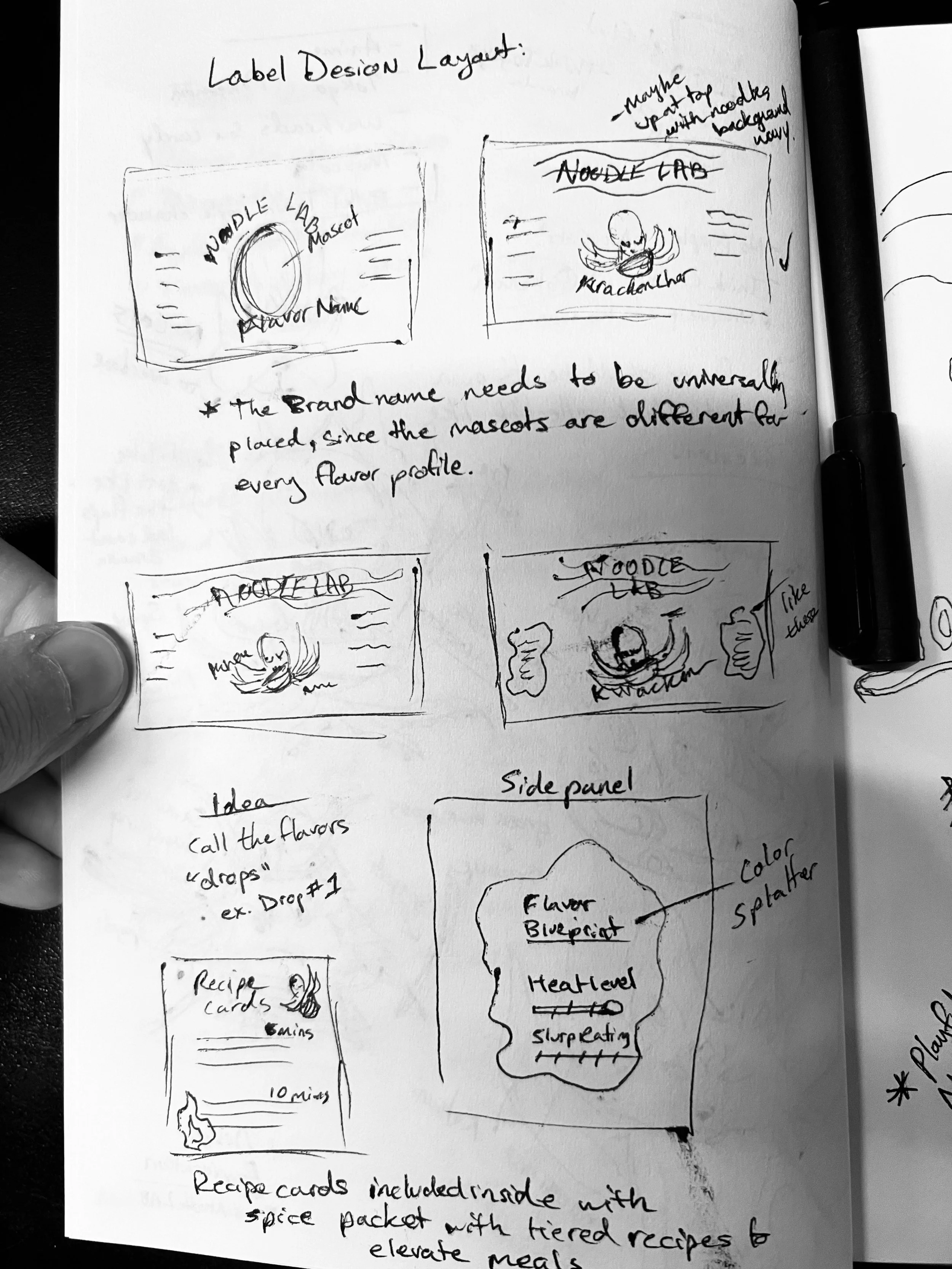
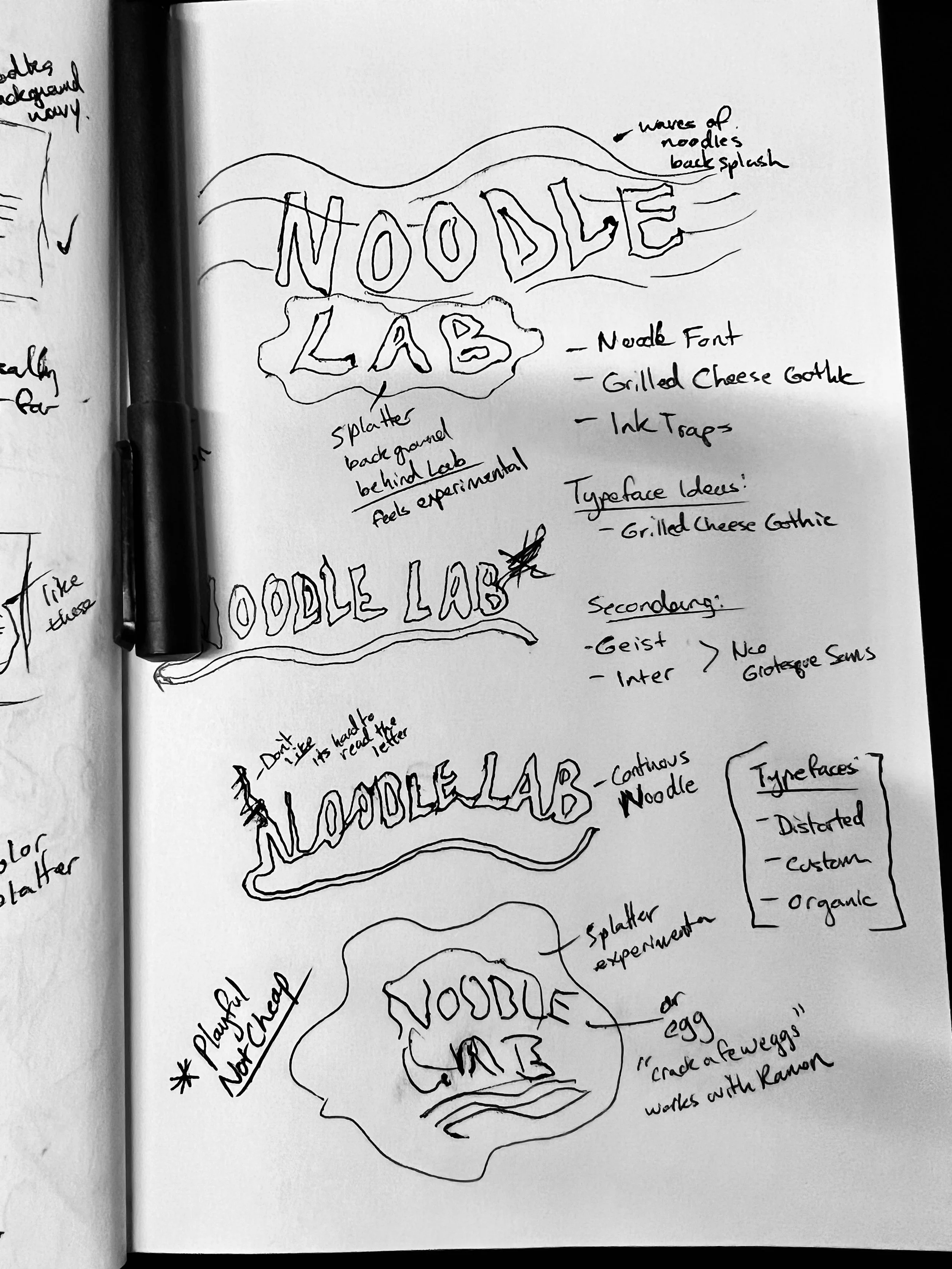
Strategy Sketches
Behind the Process
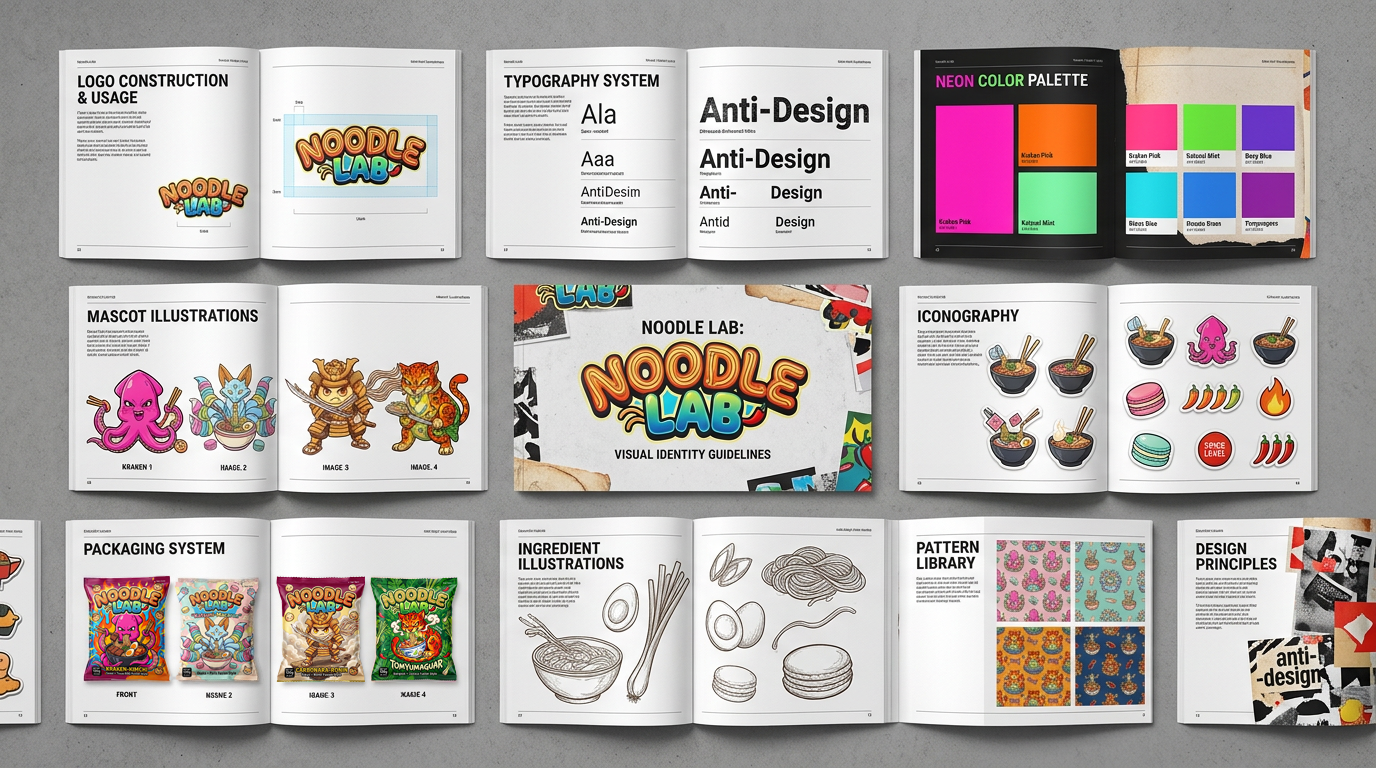
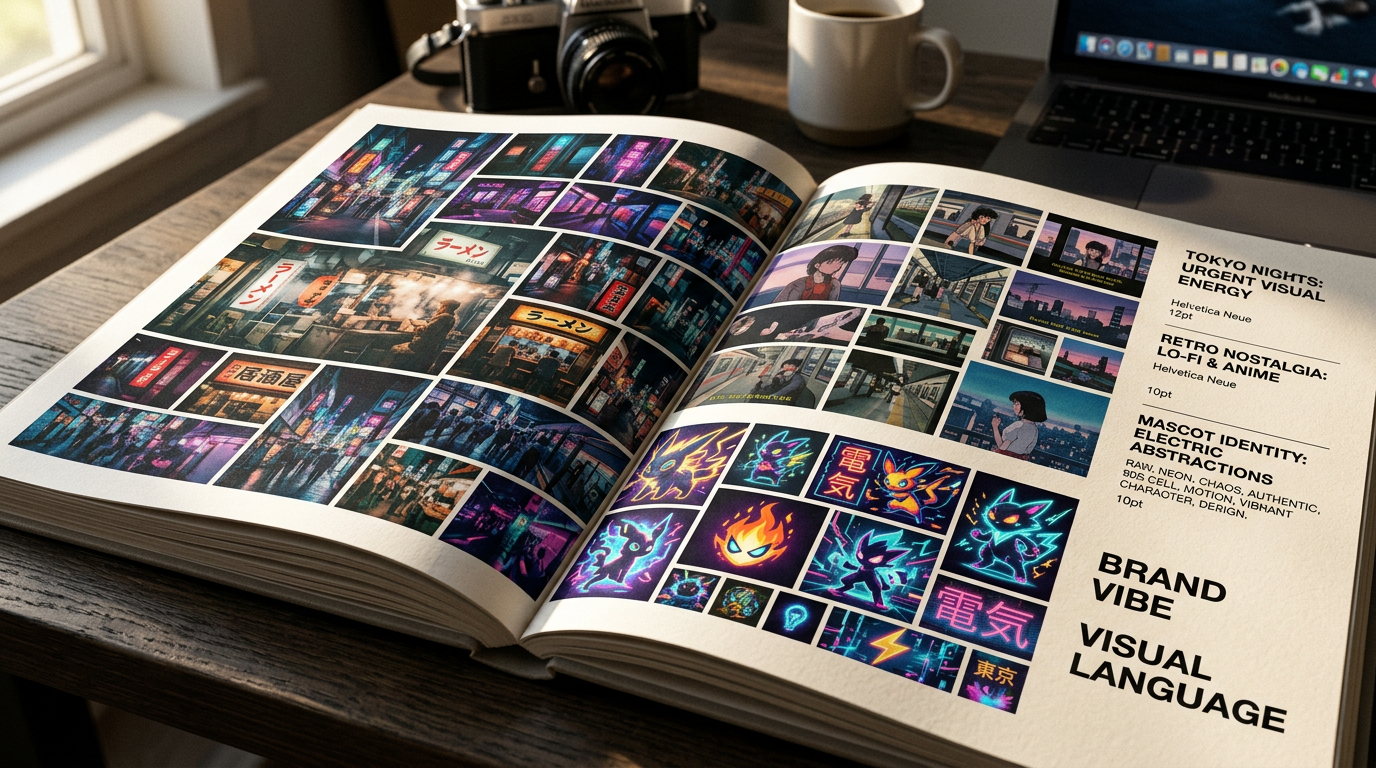
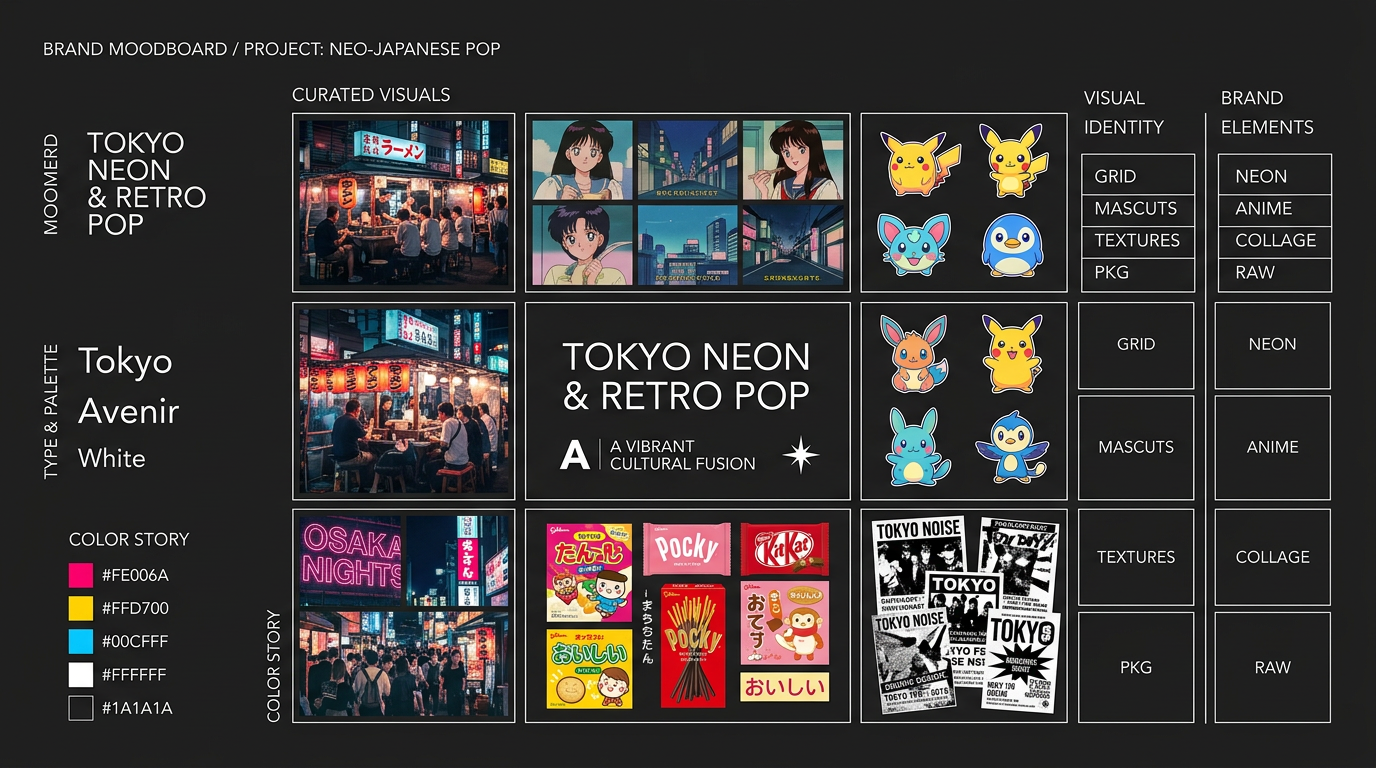
Every project begins with exploration. Before refining the final identity, I spend time sketching ideas, testing visual systems, and documenting strategic thinking. These early concepts aren't polished solutions—they're part of the process of questioning assumptions, identifying opportunities, and discovering the strongest direction. The following pages offer a glimpse into that exploration and how the Noodle Lab brand evolved from concept to a cohesive identity system.
Art Direction
“Tokyo Convenience Store Meets Underground Zine”
Influences:
* Japanese capsule toy packaging
* Pokémon-era mascot energy
* Harajuku sticker culture
* Photocopied punk flyers
* Glitch graphics
* Anti-design editorial layouts